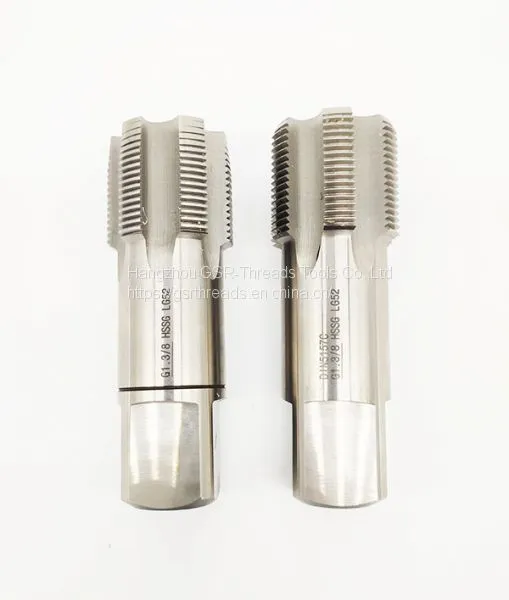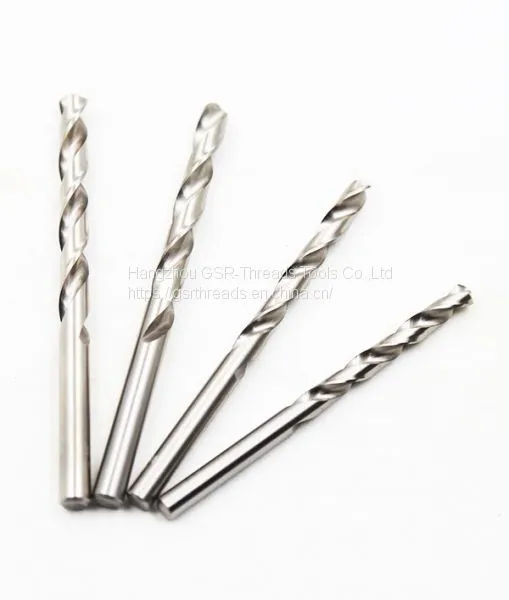

How To Identify the Pros and Cons of Taps
There are many types of taps on the market now. Due to the different materials used, the prices of the same specifications are also quite different. It makes buyers look at flowers in the fog. I don’t know which one to buy. The following is a tap guide to teach you a few simple method:
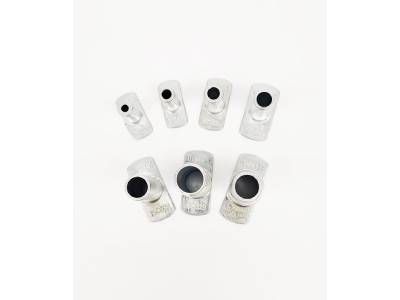
Professional Taps
Step/MethodCheck if the thread at the front end of the tap groove is evenly ground and whether there is a quick cut at the cutting edge of the groove. The good ones are in the positive 7-shape, and the bad ones are in the reversed 7-shape or U-shape. Precision of thread)
Check the heat treatment situation: whether the Professional Taps is broken when falling into the air in a parabolic curve. The break indicates that it is brittle
Knock off the tap to see that its fracture is obliquely long and the grains in the fracture are finely knotted, indicating that the heat treatment and material are good, flat or obliquely short, and the coarse grain (metallographic structure) is not well measured.
The quality of Industrial Taps mainly depends on its original material, heat treatment, geometry, precision, equipment, speed and processed material, hardness, quality of the operator, etc., how relevant! When selecting a tap, pay special attention to the original material, heat treatment, and geometry of the tap. For different machining holes, it is recommended to choose different types of taps! We supply different types of Industrial Taps.
In actual operation, the grinding of the cutting edge is very important, especially for stainless steel series, which can be divided into cutting and lengthening the guide. The cutting edge should be ground to a lower angle to increase the strength of the tap. At the same time, cooling and lubrication are required. Keep up, the service life of the tap is relatively long! In short, we are dealing with specific situations concretely.
The company also provides Thread Cutting Tools, if you need to know, please feel free to contact us
Recently Posted
-
Thread Cutting Procedure on Lathe Machine
February 24, 2022Before talking about how to cut threads on a lathe, it is very important to know what a thread is? In layman's terms, a thread is a "series of crests and troughs" or "spiral grooves" formed along a cylindrical or conical surface. Technically, it is defined as a spiral ridge with a uniform cross-section that wraps around a cylindrical or conical body. Threads are generally classified as external ThRead More -
What Are the Common Methods of Thread Machining?
February 24, 2022Here are seven common ways of processong the threads, and here we GSR introduce them to you.Thread cuttingGenerally speaking, it refers to the method of processing threads on the workpiece with forming tools or abrasives, mainly turning, milling, tapping and grinding, crushing and cyclone cutting. When turning, milling and grinding threads, the drive chain of the machine tool ensures that the turning tool, milling tRead More -
How to Repair a Damaged Thread in 4 Steps?
February 24, 2022There are various reasons why threads can be damaged, such as corrosion, wear or excessive tightening torque. In this article, Threading Tool Manufacturer will explain how to repair damaged threads.Before you can start repairing damaged threads, you will need the following tools:Drilltwist drillSingle-edged tapsTap wrenchAssembly toolsThreaded insertsNeedle breakersMake sure beforehand that the single-edged tap andRead More -
Analysis Summary of 9 Major Problems of Tap Fracture
February 8, 20211.The tap quality is not good:Main materials, CNC tool design, heat treatment conditions, machining accuracy, coating quality, etc. For example, the size difference at the transition of the tap section is too large or the transition fillet is not designed to cause stress concentration, and it is easy to break at the stress concentration during use. The section transition at the junction of the shank and the blade is too closeRead More

Contact Us
Recommended Products
-
 Wire Thread InsertNegotiableMOQ: 100 Pieces
 -
Die Guide for External Thread CuttingNegotiableMOQ: 100 Pieces
-
Hexagon Die Nut DIN 382 HSS - MetricNegotiableMOQ: 100 Pieces
-
Adjustable Tap Wrench, Zinc Casted for Hand TappingNegotiableMOQ: 100 Pieces
-
DIN5157 BSP Hand Tap Set, 2pcs HSS-GNegotiableMOQ: 100 Pieces