
What Are the Common Methods of Thread Machining?
Here are seven common ways of processong the threads, and here we GSR introduce them to you.
Generally speaking, it refers to the method of processing threads on the workpiece with forming tools or abrasives, mainly turning, milling, tapping and grinding, crushing and cyclone cutting. When turning, milling and grinding threads, the drive chain of the machine tool ensures that the turning tool, milling tool or grinding wheel moves accurately and evenly along the axial direction of the workpiece for each revolution. In tapping or threading, the tool (tap or plate) rotates relative to the workpiece and is guided by the thread groove that is first formed to move the tool (or workpiece) axially.
Threads can be turned on a lathe using either a forming tool or a thread comb. Thread turning with a forming tool is a common method for single-piece and small batch production of threaded workpieces due to its simple tool structure. By machining threads on a specialized thread turning machine, productivity or accuracy can be significantly increased.
Milling is performed on a thread milling machine with a disc or comb cutter. Disc milling cutters are mainly used for milling trapezoidal external threads on workpieces such as filaments and worm gears. Comb milling cutters are used for milling internal and external common threads and tapered threads with high productivity. This method is suitable for batch production of threaded workpieces of general accuracy or for rough machining before grinding.
This method is mainly used to grind the precision threads of hardened workpieces on thread grinding machines, and there are two types of grinding wheels: single-wire and multi-wire, depending on the shape of the grinding wheel cross-section. This method is suitable for grinding precision screws, threaded gauges, worm gears, small batches of threaded workpieces and sharpening precision hobs.
A nut or screw type thread grinding tool made of soft material such as cast iron is used to grind the machined threads of the workpiece in the forward and reverse direction to improve the pitch accuracy. Hardened internal threads are also usually ground to eliminate deformation and improve accuracy.
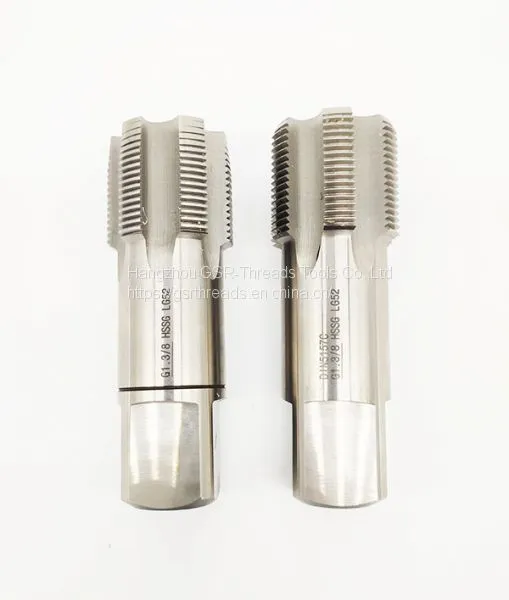
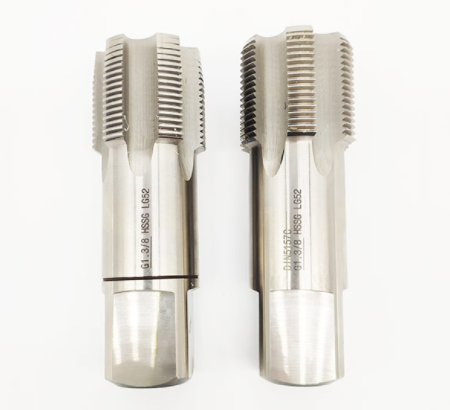
Tapping is the process of screwing a tap into a pre-drilled bottom hole in a workpiece with a certain torque to produce internal threads.
Threading is the process of cutting external threads on a bar (or tube) workpiece with a plate. The accuracy of tapping or threading depends on the accuracy of the tap or plate. Although there are many ways to process internal and external threads, the internal threads of small diameters can only be processed by taps. Tapping and threading can be done by hand, or by lathe, drill press, tapping machine or threading machine.
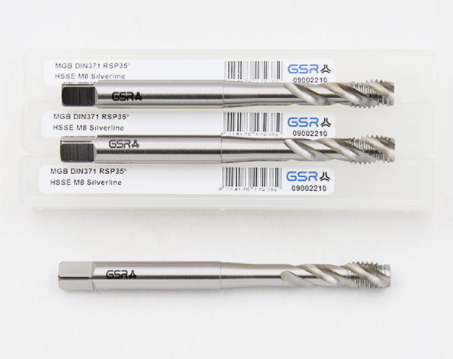
Thread rolling is usually performed on a thread rolling machine or on an automatic lathe with an automatic opening and closing thread rolling head. Rolling generally cannot process internal threads, but for softer workpieces can be used to cold extrude internal threads without a slotted extrusion tap, the working principle is similar to tapping, and the processing accuracy and surface quality is slightly higher than tapping.
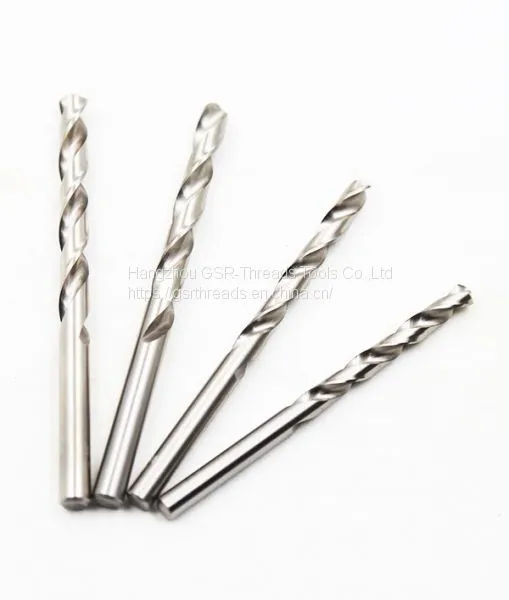
Our main business range are production and sales of hardware tools, including key products as: threads cutting tools such as taps and dies, drilling tools such as twist drill bits. The company's pursuit of Quality Control has enabled it to achieve successful sales performance and good reputation in the field of such tools. Please contact us if you need.
Recently Posted
-
Thread Cutting Procedure on Lathe Machine
February 24, 2022Before talking about how to cut threads on a lathe, it is very important to know what a thread is? In layman's terms, a thread is a "series of crests and troughs" or "spiral grooves" formed along a cylindrical or conical surface. Technically, it is defined as a spiral ridge with a uniform cross-section that wraps around a cylindrical or conical body. Threads are generally classified as external ThRead More -
How to Repair a Damaged Thread in 4 Steps?
February 24, 2022There are various reasons why threads can be damaged, such as corrosion, wear or excessive tightening torque. In this article, Threading Tool Manufacturer will explain how to repair damaged threads.Before you can start repairing damaged threads, you will need the following tools:Drilltwist drillSingle-edged tapsTap wrenchAssembly toolsThreaded insertsNeedle breakersMake sure beforehand that the single-edged tap andRead More -
Analysis Summary of 9 Major Problems of Tap Fracture
February 8, 20211.The tap quality is not good:Main materials, CNC tool design, heat treatment conditions, machining accuracy, coating quality, etc. For example, the size difference at the transition of the tap section is too large or the transition fillet is not designed to cause stress concentration, and it is easy to break at the stress concentration during use. The section transition at the junction of the shank and the blade is too closeRead More -
Machine Tapping Method and Precautions
February 8, 2021Due to the low efficiency and unstable quality of Hand Taps, in actual mass production, machine tapping threads with good quality, high efficiency and low production cost are mainly used. But in the process of machine tapping, we must also use machines and tools correctly, otherwise, it will also affect the quality of threaded holes.1. The accuracy of the machine toolThe radial runout of the drilling machine spindle shouRead More

Contact Us
Recommended Products
-
 Wire Thread InsertNegotiableMOQ: 100 Pieces
 -
Die Guide for External Thread CuttingNegotiableMOQ: 100 Pieces
-
Hexagon Die Nut DIN 382 HSS - MetricNegotiableMOQ: 100 Pieces
-
Adjustable Tap Wrench, Zinc Casted for Hand TappingNegotiableMOQ: 100 Pieces
-
DIN5157 BSP Hand Tap Set, 2pcs HSS-GNegotiableMOQ: 100 Pieces